

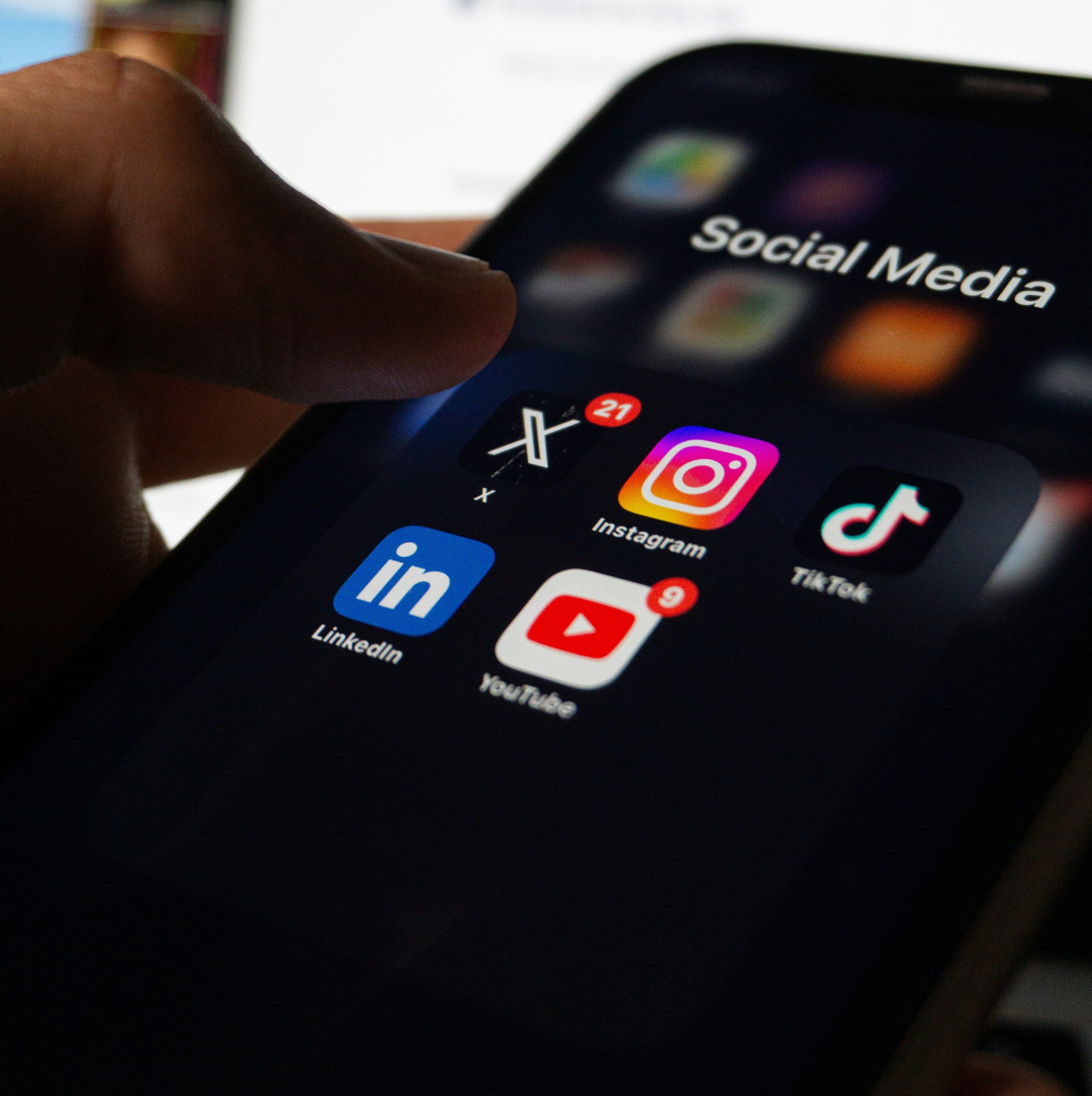
Admit it, you’re addicted to social media. Or maybe you’re not. Maybe you’re one of the few who has been able to stay free from the algorithmic grasp of an endless feed. For most people though, social media is an addiction that’s hard to break. It was for me.
Rather than deleting social apps or setting screen time limits, I tried a different approach recently. I bought a small 10-year-old Kindle on eBay with the goal of replacing every urge to reach for social media with some reading. It was surprisingly easy.
When eating a quick lunch during work, social media was a constant companion. Now, I flick open the book I’m reading on Kindle and get a few pages in. At nighttime before bed, instead of Threads or X or Instagram, I pop open the Kindle and read until I’m ready to fall asleep.
Because the Kindle is small, it goes everywhere with me easily. The same way my phone goes everywhere with me. That makes it much easier to reach for the Kindle and read a book instead of scrolling a social media feed.
But outside of kicking the social media addiction, why is this important?
Reading Is Writing
The more a writer reads, the better they write. I don’t think there’s much dispute in this logic, but how much is enough? Can you quench your thirst for reading? Can you hit a peak in writing quality at which point you don’t need to read anymore? Probably not. With reading, more is almost always better.
I was already what I would consider a voracious reader. But since I implemented this new social media replacement strategy, I am ripping through books. I use Libby to find e-books from my local library, and if I can’t find something I want, Kindle books are relatively inexpensive. Because I’ve increased my book consumption velocity, I’ve been reading wider than I normally would.
Literary fiction, mystery, science-fiction, and yes, of course thrillers. Book club fiction and things a little more academic. I’m consuming in a way that is productive and educational while also being fun.
Being exposed to multiple types of writing from people of all different backgrounds, my own writing gets better. Books challenge me to experiment with my writing. They suggest new ways of bringing characters to life, new ways to present dialogue and life on the page.
As Stephen King once said:
If you don't have time to read, you don't have the time (or the tools) to write. Simple as that.
Book Recommendations
What I’m reading has not changed. I’m still working through the same three books I mentioned last week, but after talking with Ron Clyburn last week (more on that below), I realized there are a lot of books I’ve read in the past that I could recommend here. Some of these books, I’ve read multiple times. Let’s take a look at three very different books.
The God of the Woods by Liz Moore
If you’ve never read Liz Moore’s work, I highly recommend you change that. The God of the Woods is her most recent novel and it’s an incredible mix of generational trauma, period piece, and mystery.
Not only does Moore make you feel like you’re living in the middle of the 20th century throughout the novel, she also makes the setting so real you can feel it and taste it. The God of the Woods is set between the early 1960s and mid 1970s and follows the disappearance of a camper at a summer camp owned by a wealthy family. It just so happens that the missing camper is the daughter of the family and her brother also went missing 15 years before.
River, Sing Out by James Wade
For the crime fiction lovers, this one is highly recommended. Wade’s River, Sing Out is far more literary than most crime fiction, but that doesn’t slow the plot at all. Wade has a talent for writing action and dialogue within a violent world that draws you in and makes you forget the danger until it’s right there upon you.
The novel follows a young boy living in East Texas with his dead beat father. The boy crosses paths with a teenage girl on the run from dangerous men. Despite the boy’s age and his fear, he refuses to leave the girl’s side as they both navigate the violence around every corner.
Wonder Valley by Ivy Pochoda
Ivy Pochoda is a master story-teller. It’s hard to compare her to anyone else because the way she writes is both immersive and effortless. Surely, it’s not actually effortless, but it feels that way, and that’s damn hard to pull off. Wonder Valley is an acid trip of a story that revolves around a commune in the middle of the California desert.
In Wonder Valley, Pochoda traces the lives of multiple characters from very different circumstances. Two violent criminals (one more violent than the other) on the run, a business man from Los Angeles who becomes entranced by a man running naked on the freeway, a girl who seems to be on the run herself as she finds the commune, and the commune itself. It’s run by a family with the patriarch leading nightly story-telling and communal killing of animals. Every character’s collision is well timed and leads to an explosion of violence and relief.
Person of Interest
Last week, Ron Clyburn—a fellow Substack writer of crime fiction—was kind enough to have me on his podcast. We ended up going for a full hour and talked about everything from books and writing to 1930s immigration and naturalization in New York.
I had so much fun chatting. I hope you’ll give wrong a follow, subscribe to his Substack, and watch/listen to the podcast.
Back To You
I’d love to hear how you read. E-books? Audio? Paperbacks with cracked spines? Brand new hardcovers? How has reading influenced your writing if you’re a writer? How has reading influenced your life if you’re not a writer?
I think this is a wise decision. You'll definitely get more out of actually reading more books. And yes, writers need to read often. It keeps you sharp and you see things you didn't see before sometimes. You learn about storytelling and grow as a writer. Great post.