

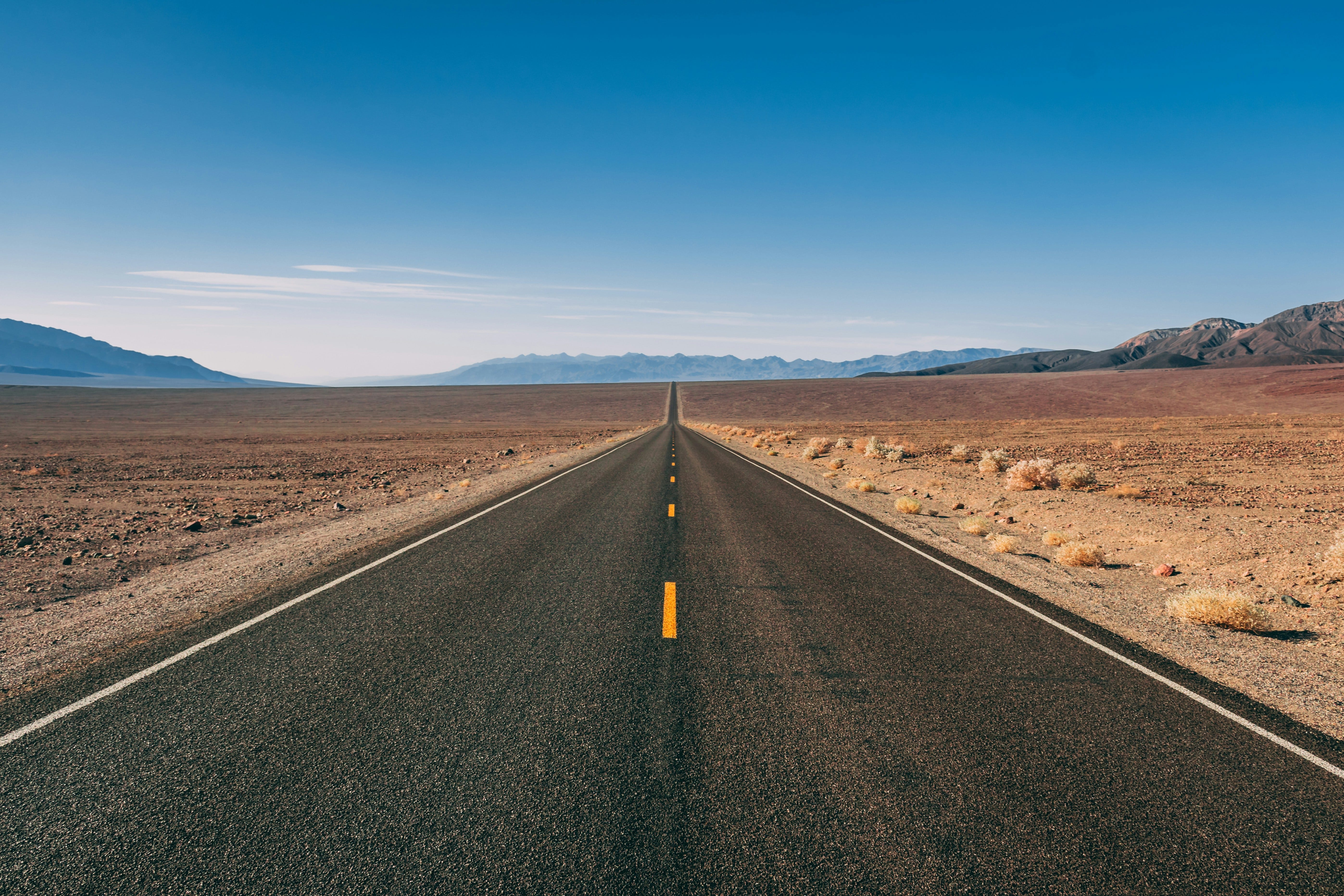
Last week, I promised to talk about a few authors who write about specific places so well you’d think they were from those places even though they’re not. We’ll cover that today as well as talk about short stories and how I think about publishing them (just had a new short story published by a literary journal!).
Writing Place Beyond Your Own Backyard
Last week, I talked about why I write about the desert. I talked about how the desert is a character and how my history with the desert makes it a viable and engaging setting for my stories. But I also mentioned how some authors are so good at writing about places that they don’t even need to be from the places about which they write to be good at it.
Here are a few examples.
Chris Whitaker
Whitaker is a British author, but he sets his stories in the United States, usually in small towns. In his debut novel, We Begin At The End, Whitaker sets most of the novel in a fictional coastal town in California called Cape Haven. He does such a great job building the setting and places the characters perfectly in the setting that you’d assume he was from a small town along the beach. Instead, he was born and raised in London.
If you haven’t read Whitaker’s writing, I highly recommend it. In addition to being great at setting, he’s a master of character development.
Phillipp Meyer
While Meyer isn’t as far removed from the settings of his novels as Whitaker, he still manages to write about place in a way that makes you feel like he must be intimately familiar with the cities and towns in which he sets his stories. Meyer was born and raised outside of Baltimore, Maryland. So, it’s not a stretch for him to be able to set his first novel, American Rust, in Pennsylvania. But he does it so well that it feels like Meyer must have lived in the old steel towns in Pennsylvania, must have felt the depression that residents of those towns felt as manufacturing dried up and people were left without jobs.
The novel that is far more of a stretch from Meyer’s own home is The Son. The novel is a multi-generational tale set in Texas during the early 20th century. He immerses the reader in the feeling of the time—American exceptionalism, Texas pride, racism, war, violence. It feels like Texas. It tastes like Texas as you read. All from someone whose closest ties to Texas was a brief stint to get his MFA at the University of Texas. It’s incredibly done, as proven by the novel being the runner-up for the Pulitzer in 2014.
Jeanine Cummins
This one may stir some emotions from corners of the literary world. Jeanine Cummins wrote American Dirt, which I thought was a wonderful, tense book. It’s also a book about Mexican migrants battling violence and law to escape Mexico. It’s a book that generated quite a bit of controversy because of Cummins’ heritage. Cummins was born in Spain and has Puerto Rican heritage, but right before American Dirt was released, a string criticism accused her of cultural appropriation for writing about a Mexican family escaping to America. Some of the critics were well-known authors of color and have valid lived experience to join the debate.
That said, I don’t think the criticism was fair, and I’m including her on this list because of how well she portrayed Mexico and the far southwest generally. Cummins did not live in or grow up in Mexico, but she was able to capture the beauty and the ugliness of the country through her writing.
A Place For My Stories
When I was going through my MFA program, I published short stories with literary magazines frequently. I learned to press through rejection and even championed the art of being rejected as a mechanism for forcing yourself to get your writing out there. However, since 2017, I had not had anything published and I didn’t really try.
Part of this was because of life. Work overtook me and writing took a back seat. Part of this was because what little writing I did was focused on novels. Regardless, I started writing short stories again a little more than a year ago. Some of those short stories are building into a world that I think might be my next novel. Others are just sitting in a folder, never to see the light of day.
But for some, I now have two paths to publish them. I can publish them here or I can try to get them published in literary journals. You’ve seen some of my stories that I’ve published here. They are squarely in the crime fiction bucket, I think. Some of my other stories lean a little more literary. For those, I send them to the journals and hope for the best.
Well, for the first time since 2017, I had a story accepted for publication and it’s now live. The journal is called Brian’s Bookcase and it’s a special kind of literary journal. It’s an ode to the founder’s brother and it supports mental health, which is near and dear to me. I’m so excited to have a piece accepted and published in this journal. And it’s a fitting piece. The story is about two siblings grappling with the fallout from their parents’ choices. Left to fend for themselves, never properly brought up, they each search for ways to drown the demons of their past. One chooses drugs, and the other chooses adrenaline rushes.
Anyway, if you think that sounds cool, you can read it here.
Over to You
How much does an author’s background matter to you when they’re building a setting? Do you prefer local insiders, or do you think an outsider’s eye brings something unique to the page?
Drop a comment below. I’d love to hear your thoughts! And if you enjoyed today’s post, hit that button below to subscribe.
Almost everything I write takes place in and around my hometown of Tacoma, Washington. Part of that is the familiarity. Part of that is laziness. When it comes to writers, I like the ones who have made their cities part of their mythos. George Pelecanos has DC. James Ellroy has 20th Century Los Angeles. But then again, there's guys like Don Winslow who use locations all over the place. The tricky part is making sure to evoke the area in a way that makes sense to outsiders and rewards locals. I remember my friend Joshua Swainston in Tacoma Pill Junkies put a red light at an intersection that doesn't have one and it took me right out of the story for a moment. I think he changed it in subsequent editions.