

I love a certain kind of mystery. Multiple kinds really. Perhaps it’s easier to say that I like all types of mystery novels except cozy mystery. I want there to be real stakes, morally gray characters, violence. When you remove cozy mysteries from the equations, there’s still a surprisingly wide range of mystery types out there.
The mystery thriller where the mystery is the element that propels forward the thrill of the novel, and that thrill can be danger or violence or a ticking clock. It can be a lot of different things, but the thrill of the thriller is an accelerant and it quickens the pace of the book.
Then there’s the psychological mystery—often still referred to as a psychological thriller, but I think they are different. Here, the mystery is deep and it plays on the characters’ psychological tendencies, their flaws, their traits. It’s not always as fast-paced as a true thriller, but it’s still propulsive.
Noir mystery is not generally a term you’ll find in the bookstores, but I think it’s an apt description of mystery novels that take are told from the perspective of criminals or victims. When people think of noir, they often think of private detectives, but noir is broader than its cousin Roman noir which focuses more on detectives and is more hard-boiled.
Regardless of the type of mystery novel, it’s hard to write one. At least for me.
My First Mystery Novel
I’m currently querying agents with my mystery novel. It’s my first mystery, and it was incredibly hard to write. Harder than anything else I’ve ever written. First, let me give you the two-line pitch, and then I’ll explain why it was so hard to write.
Returning home to care for her dying mother, Sara Campbell falls into the very obsession that destroyed her father: solving the 1981 cold case of a dead girl found in the desert. But as her viral 2001 blog uncovers a dark web of small-town secrets, Sara must break a generational cycle of vengeance before the truth claims another life.
This novel was inspired by two things:
My grandfather, who was a real police sketch artist and drew the picture of an unidentified girl—a case that was eventually solved by an early internet sleuth who went on to start the Doe Network
A short story I wrote during my MFA
The short story was not a mystery, but I knew the novel had to be. But I’d never written a mystery novel despite reading so many of them. So, as I wrote, I listened to mystery novel audio books and I re-read some of the paperbacks I had loved in the past. Still, I wasn’t getting anywhere.
Finally, it dawned on me that I could not write this book the way I had written others. I’m what the kids call a pantser. I don’t have outlines for my books. I just write and hope the characters guide me. This was impossible to pull off when writing a mystery. I needed to know the specific beats, the clues, the threats, when they would land. All of that had to be planned up front.
So I outlined for the first time ever and it mostly worked. It helped me get a first draft done. And then, I had to refine the story, refine the mystery. I still laugh at this page in my notebook from the outline.

Ignore the terrible handwriting. That sentiment encapsulates my headspace as I was writing the first draft and outlining it. It was hard. Harder than anything I’ve ever written.
But, you know what? I loved it. I want to write another mystery. I want to get better at it. We’ll see what happens with this book, but I’m already sketching out the plans for my next novel. And you better believe there will be a mystery element to it.
Oh, and if I had to categorize my story, I’d put it in the psychological thriller bucket.
Now, let’s take a look at some authors who have done mystery well in each of the categories I listed earlier.
The Professionals
These authors are just a few contemporary picks I came up with and I have personally read that I believe do mystery well in each of the categories I mentioned.
Mystery Thriller
Dennis Lehane is one of my favorite authors. I’ve mentioned him before. He showed me what I was allowed to do in writing and unlocked so much. Turns out, he’s a pretty damn good mystery writer. His original Kenzie and Gennaro series would be considered Roman noir, not necessarily noir. But I put those books in the Mystery Thriller category because they are truly thrillers.
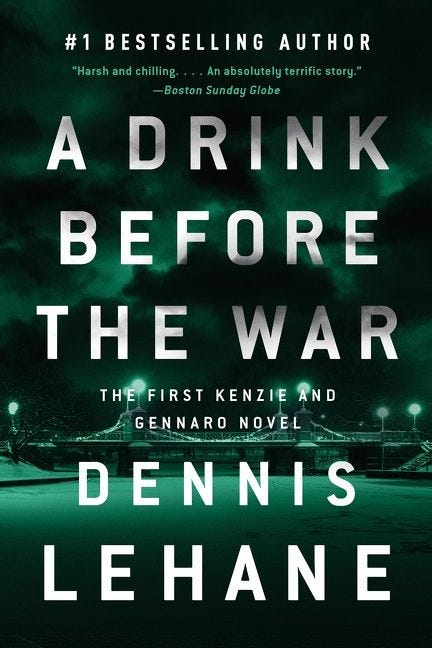
Both Patrick Kenzie and Angie Gennaro are constantly on the run, getting shot at, shooting at other people, and generally just in some really bad situations. It’s fun and fast-paced. And the thriller portions of the books do not minimize the mystery elements.
Now, we should contrast that with another category. Dennis Lehane does Noir Mystery as well as anyone. Look no further than Mystic River. It’s an incredible example, and it show his range.
Psychological Mystery
There are so many examples, it’s hard to pick just one. The knee-jerk reaction would be to list someone like Gillian Flynn. Gone Girl is the preeminent example of psychological thriller (and also a myster), but I wanted to pick someone slightly less mainstream.
Tana French is an Irish author, and she very much is mainstream. She’s incredibly successful, but I’d bet many people who have read Flynn have not read French. Pick any of French’s novels and you’ll find wonderful psychological elements that make the story work. In fact, without the deep psychological angles, her novels probably fall flat. Her Dublin Murder Squad books all have flawed and complex characters grappling with their psychological demons, but it’s a newer standalone novel I want to focus on.
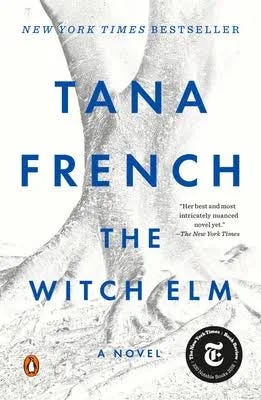
The Witch Elm is a perfect example of a psychological mystery. I wouldn’t consider it a thriller at all. It’s a mystery through and through. It’s relatively slow paced, and that’s intentional. French wants you to live inside the protagonist’s head and understand his trauma and his ego. Specifically, a traumatic event at the beginning of the novel shapes everything this character does. It paints the entire mystery differently than if this character had not gone through the ordeal he does. It’s a wonderful novel.
Noir Mystery
Often books in this category are labeled as crime books. And what is this Substack if not a crime fiction blog, so it’s fitting. However, most crime novels have mystery elements. Not all, but most. I want to highlight someone who has done noir mystery as good as anyone.
Jordan Harper’s Everybody Knows is a brutal, pessimistic (but probably accurate) portrayal of Los Angeles. The characters are often bad people. They don’t just operate in the moral gray zone, they step entirely across the line. But his characters are rich and real. You can see them and hear them like they are in the room with you.
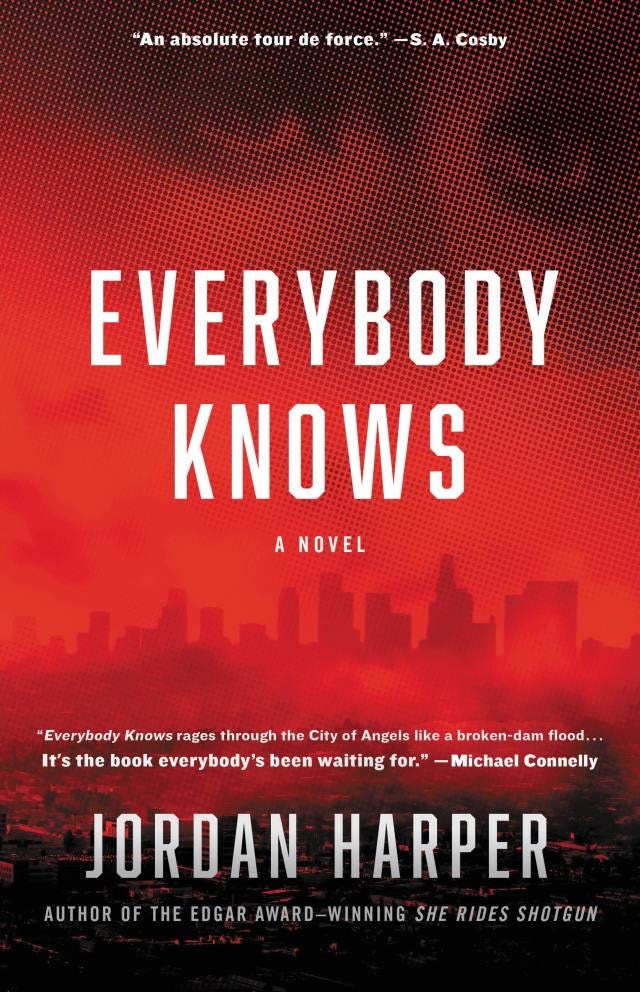
And then there’s the mystery at the center of the novel. It fuels everything that happens and it is what makes you willing to live with these characters. That and the writing is so damn good.
Back To You
What are some of your favorite sub-genres of mystery? Who are your favorite authors and favorite books? Mystery is such a fun genre, despite how difficult it is to write.